
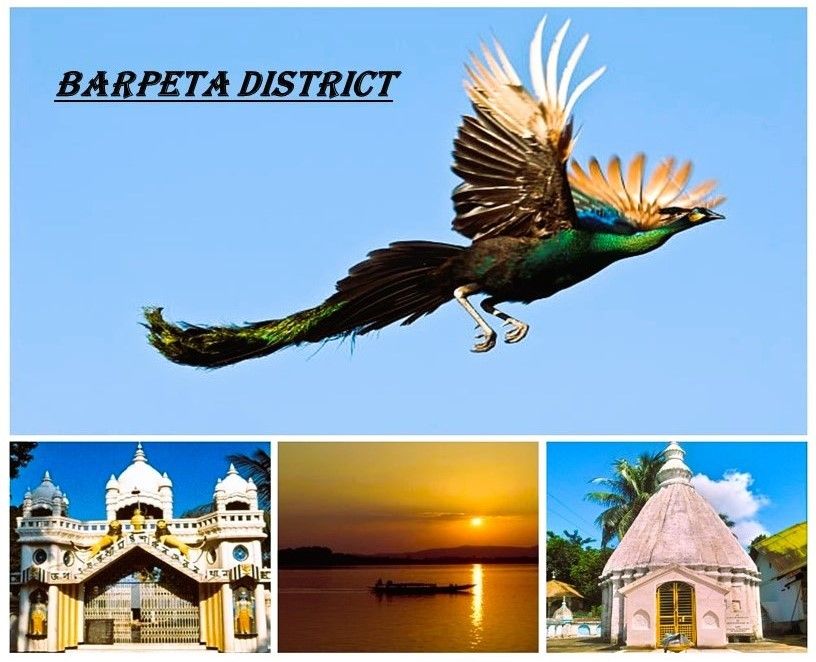
Barpeta, located in western Assam, is a district that beautifully intertwines spiritual legacy, cultural richness, and ecological splendor. Known as the birthplace of Neo-Vaishnavism, Barpeta invites travelers to explore its sacred institutions, vibrant traditions, and lush landscapes.
A Cradle of Neo-Vaishnavism and Assamese Identity
Spanning 3,245 square kilometers, Barpeta is a cornerstone of Assamese heritage. Its spiritual significance dates back to the 16th century, when Srimanta Sankardeva and his disciple Madhavdeva pioneered the Neo-Vaishnavite movement. This reformative wave emphasized devotion, equality, and cultural expression, leaving a lasting imprint on the region.
The district headquarters, Barpeta town, is affectionately called Satra Nagaridue to its dense concentration of Satras monastic centers that continue to nurture religious and cultural life. These institutions evolved into hubs of education, music, dance, and literature, shaping Barpeta into a beacon of spiritual and artistic enlightenment.
Geography and Natural Wealth
Barpeta lies between 26°5′N to 26°49′N latitude and 90°39′E to 91°17′E longitude. It shares borders with Bhutanto the north, Nalbari to the east, Kamrup and Goalpara to the south, and Bongaigaon to the west. The district’s terrain is predominantly flat and fertile, nourished by the Beki River, a tributary of the Brahmaputra. This river supports agriculture and sustains a rich ecosystem, making Barpeta a haven for biodiversity.
Historical and Cultural Legacy
Barpeta’s cultural identity is deeply rooted in the teachings of Sankardeva and Madhavdeva. The Satras they established became centers of egalitarian values and artistic innovation. The Barpeta Satra, founded by Madhavdeva, is especially notable for its democratic administration, a system still in practice today. It hosts Bhaonaperformances dramatic enactments of mythological tales that blend expressive storytelling with elaborate costumes.
Other significant Satras include:
- Patbaushi Satra: Established by Sankardeva, known for its literary and musical contributions.
- Ganakkuchi Satra: Revered for its tranquil setting.
- Jania Satra: A hub of Vaishnavite philosophy.
- Sundaridiya Satra: Celebrated for its artistic legacy.
- Baradi and Kanara Satras: Custodians of ancient manuscripts and devotional practices.
Urban Centers and Economic Landscape
Barpeta district comprises several towns, each contributing to its socio-economic vitality:
- Barpeta: The spiritual and administrative core.
- Howly: Known for its educational institutions.
- Barpeta Road: A commercial hub with excellent connectivity.
- Sarbhog: Gateway to Manas National Park.
- Pathsala: Renowned for performing arts and higher education.
- Sarthebari: Famous for its bell-metal craftsmanship.
- Barmara, Kalgachia, Bhawanipur, Sarupeta, Barbhitha: Support local industries and traditional crafts.
Demographics and Livelihoods
Barpeta is home to a diverse population including Assamese Hindus, Muslims, Bodos, and other indigenous communities. This multicultural blend fosters social harmony and inclusive development. The district has witnessed a steady rise in literacy rates, supported by a growing network of schools and colleges.
Agriculture remains the backbone of the economy, with rice, mustard, and juteas primary crops. Complementing this are handloom weaving and bell-metal industries, especially in Sarthebari, which produce exquisite traditional items and jewelry.
Festivals and Artistic Heritage
Barpeta’s cultural calendar is vibrant and deeply spiritual. The Raas Mahotsav, dedicated to Lord Krishna, transforms the town into a stage of devotion and artistic expression. Doul Mahotsav, Barpeta’s version of Holi, features Holi Geet, Ojapali, and Dhulia Nritya traditional art forms that captivate both locals and visitors.
The district is also celebrated for its Muga and Eri silk weaving, used to craft the elegant Mekhela Chador, A Symbol of Assamese Identity.
Tourism and Attractions
Barpeta offers a rich tapestry of experiences for travelers:
- Manas National Park: A UNESCO World Heritage Site, home to Bengal tigers, golden langurs, pygmy hogs, and one-horned rhinoceroses. Located along the Indo-Bhutan border, it features breathtaking landscapes and diverse wildlife.
- Sundaridiya and Patbaushi Satras: Architectural and spiritual marvels.
- Pari Hareswar Devalaya, Dubi: An ancient temple steeped in devotion.
- Dargah of Syed Shahnur Dewan, Bhella: A revered site for Sufi followers.
- Sarthebari Brass Metal Industry: Renowned for its exquisite bell-metal artistry.
Connectivity and Accessibility
Barpeta is well-connected by road and rail. The Barpeta Road railway stationlinks the district to Guwahatiand other parts of Assam. A network of national and state highways ensures smooth travel, making Barpeta accessible year-round for tourists and pilgrims.
Conclusion: A Living Legacy of Assam
Barpeta stands as a living testament to Assam’s spiritual depth, cultural richness, and ecological diversity. Whether you're drawn by its sacred Satras, enchanted by its vibrant festivals, or seeking peace in nature’s lap, Barpeta offers an experience that is both profound and unforgettable.