
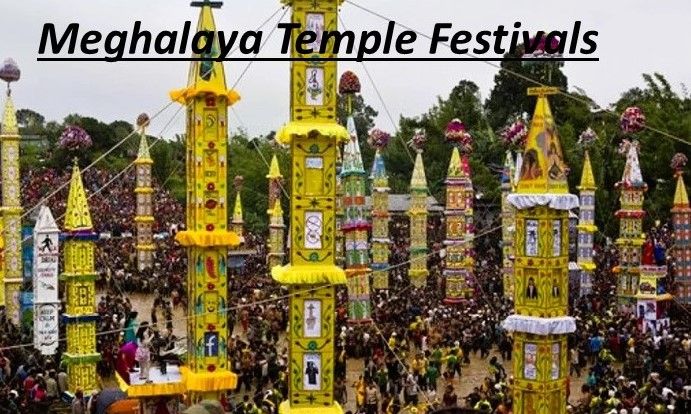
Meghalaya, nestled in India’s northeastern frontier, is a land of misty hills, lush forests, and vibrant traditions. Beyond its breathtaking landscapes, the state is celebrated for its temple festivals, which embody tribal heritage, spirituality, and communal joy. These events are not merely religious rituals but also social gatherings where communities unite through dance, music, and devotion.
Wangala Festival
The Wangala Festival, observed by the Garo tribe, is one of the most significant harvest celebrations. Dedicated to Saljong, the Sun God of Fertility, it marks the conclusion of the agricultural season. The hills resound with rhythmic drumbeats as men perform traditional drumming, while dancers move in parallel lines, symbolizing harmony and gratitude. This festival is both a thanksgiving ritual and A Joyous Occasion of Unity.
Shad Nongkrem
Among the Khasi tribe, Shad Nongkrem is a grand annual event held at Smit near Shillong. Central to the festival is the Pomblang ritual, where goats are sacrificed as offerings to ancestral deities, particularly the guardian spirit of Shillong Peak. Following the rituals, unmarried girls in ornate attire perform graceful dances, showcasing the elegance and cultural pride of the Khasi people.
Shad Suk Mynsiem
The Khasi also celebrate Shad Suk Mynsiem, or “Dance of Contentment,” in April. This harvest festival expresses gratitude for nature’s bounty. Men and women, adorned in traditional costumes, dance to the accompaniment of drums and flutes. It reflects the tribe’s deep connection to the land and their reverence for divine blessings.
Beh-dien-Khlam
The Pnar community’s most prominent celebration is Beh-dien-Khlam, held at Jowai. Unique in its symbolism, the festival represents the driving away of evil spirits, particularly the demon of cholera. A highlight is the spirited contest where groups carry a massive wooden beam across a muddy ditch, often smearing mud playfully on one another. This blend of ritual and revelry makes Beh-dien-Khlam both spiritually significant and socially engaging.
Shad Sukra
Another important festival of the Jaintia clan is Shad Sukra, celebrated before the sowing season in April or May. Rituals are performed to seek divine blessings for fertile crops and protection against calamities. Accompanied by traditional music, men and women dance in colorful attire, reinforcing agricultural traditions and spiritual devotion.
Ka Pom-Blang Nongkrem
The Khasi people also observe Ka Pom-Blang Nongkrem, a five-day thanksgiving festival held in October or November. Dedicated to celebrating the harvest and praying for peace and prosperity, it features dances, rituals, and communal prayers that highlight the tribe’s collective spirit and gratitude toward nature.
Conclusion
The temple festivals of Meghalaya are more than rituals; they are vibrant cultural spectacles that embody the values, beliefs, and traditions of its tribal communities. Whether it is The Rhythmic Drumming of the Garos, the graceful dances of the Khasis, or the playful mud rituals of the Pnars, each festival reflects the unique identity of the people. Together, these celebrations form a mosaic of spiritual devotion and communal joy, making Meghalaya a land where culture and nature harmoniously coexist.