
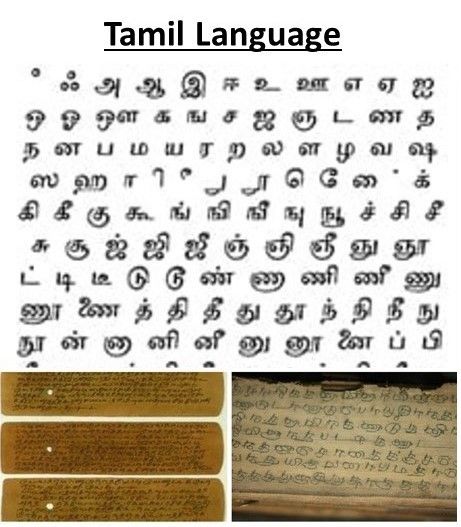
Introduction
The Tamil language, with its rich classical heritage, has been shaped by diverse cultural and religious influences over centuries. Among these, Christianity played a significant role in modernizing Tamil Linguistic Tools and enriching its vocabulary. Western missionaries, respected by Tamil scholars, introduced new methods of grammar, translation, and literary analysis. Their efforts not only facilitated the spread of Christian teachings but also contributed to The Evolution of Tamil as a Modern Language.
Missionary Contributions
Several prominent missionaries are remembered in the concise histories of Tamil literature. Constanzo Beschi (1680–1747), an Italian Jesuit, is renowned for his literary works in Tamil, including Thembavani, a Christian epic poem. Robert Caldwell (1814–1891), a British missionary, is celebrated for his pioneering study of Dravidian languages, which established Tamil’s place within the broader linguistic family. G. U. Pope (1820–1908), another British missionary and scholar, translated classical Tamil texts such as Thirukkural into English, thereby introducing Tamil literature to the wider world.
These figures were not merely religious teachers but also linguists and cultural mediators. Their respect for Tamil traditions and their scholarly approach earned them recognition among Tamil pandits, who valued their contributions to the language’s development.
Bible Translation and Linguistic Challenges
One of the central projects of Christian missionaries was the translation of the Bible into Tamil. This task was complex because Tamil’s religious vocabulary was deeply rooted in Hindu philosophy and Bhakti traditions. Words for concepts such as God, sin, and grace carried specific connotations that did not align easily with Christian theology.
Early missionaries struggled to find adequate equivalents, and it took decades to establish a reliable Christian vocabulary in Tamil. Among Protestants, Bible translations played a crucial role in shaping this vocabulary. The history of the Tamil Bible reflects three major traditions: Lutheran, non-Lutheran Protestant, and Catholic.
Johann Philip Fabricius (1711–1791) synthesized earlier efforts and produced a complete Tamil Bible, published posthumously in 1796. Known as the Fabricius Version, it became the standard translation for Tamil Lutherans and was reprinted until 1951. Its terminology and phrasing profoundly influenced the liturgical language of Tamil Christianity.
Protestant and Catholic Traditions
In the 19th century, Protestant missionaries expanded their work among Tamil-speaking populations. Initially, they relied on the Fabricius Version but later initiated new translation projects. A joint Protestant effort led to the Union Version, published in 1871 under the guidance of H. Bower and the British and Foreign Bible Society. This became the authoritative Bible for non-Lutheran Protestants.
Although revisions were attempted, the 1956 Revised Version never fully replaced the older Union Version, which continues to be used in many congregations. Catholic missionaries also contributed to Tamil Christian literature, producing prayer books, catechisms, and devotional texts that enriched the religious vocabulary.
Emergence of “Church Tamil”
By the early 20th century, the publication of complete Bible translations had established a distinct denominational language known as “Church Tamil.” This specialized vocabulary shaped spiritual and liturgical life, providing a fixed terminology for Christian doctrines. Generations of Tamil Christians grew up using this language, which became the standard way to express theological concepts.
Conclusion
The Influence of Christianity on Tamil Language is profound and multifaceted. Missionaries like Beschi, Caldwell, and Pope not only spread their faith but also contributed to Tamil’s linguistic and literary development. Bible translations, despite initial challenges, created a stable Christian vocabulary and gave rise to “Church Tamil.” These efforts modernized Tamil, enriched its literature, and connected it to global scholarship, leaving a lasting legacy that continues to shape Tamil religious and cultural identity.