
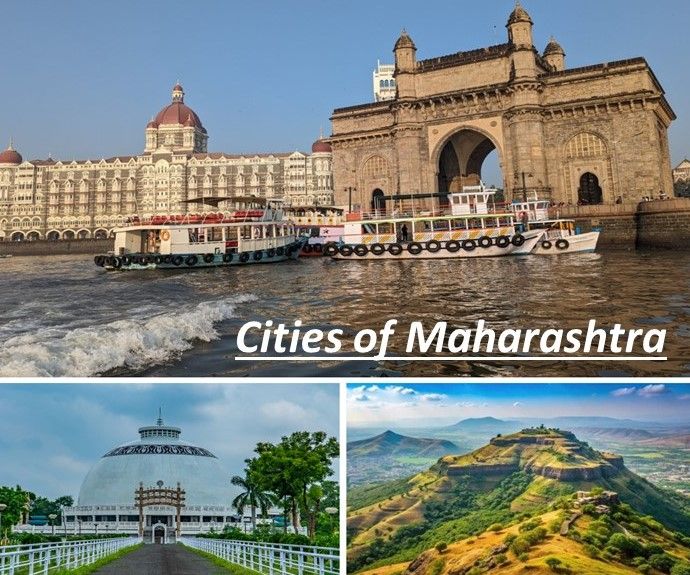
Maharashtra, India’s third-largest state by area and second-largest by population, is a land where history, culture, and modernity converge. From the grandeur of the Maratha Empire to its pivotal role during British colonial rule, Maharashtra has always been central to India’s story. Its diverse geography, enriched by the Western Ghats and rivers like the Godavari and Krishna, has nurtured thriving cities that today symbolize resilience, prosperity, and cultural richness.
Mumbai — The Financial Capital
Mumbai, perched on the western coast, is India’s economic powerhouse. With nearly 19 million residents, it ranks among the world’s most populated metropolitan cities. Its deep natural harbour has long made it vital for trade and passenger traffic. Nearly 70% of India’s stock transactions occur here, cementing its role as the nation’s financial hub. Beyond finance, Mumbai dazzles with its cosmopolitan lifestyle, thriving Bollywood industry, and global outlook, earning comparisons with international capitals.
Pune — The Cultural and Industrial Powerhouse
Once the Stronghold of the Maratha Empire, Pune has transformed into Maharashtra’s cultural capital and a major industrial hub. It hosts leading automobile giants like Bajaj Auto and Tata Motors, while also emerging as a prominent IT destination with hubs such as Magarpatta Cybercity. Pune’s educated youth have fueled the growth of its BPO sector, and nearby power plants support its energy needs.
Nagpur — The Orange City
Nagpur, celebrated for its oranges, has evolved into a significant trade and education center. The city’s economy has been revitalized by projects like the Multimodal International Hub Airport (MIHAN), attracting large-scale investments. With institutions such as Nagpur University (established in 1923) and renowned medical and engineering colleges, Nagpur stands as a hub for learning and innovation.
Ahmednagar — The Cooperative Stronghold
Situated on the banks of the Sina River, Ahmednagar is synonymous with the cooperative movement and sugar industry. With 19 sugar factories, it plays a vital role in agriculture-based industries. However, frequent droughts due to limited rainfall pose challenges. A development plan aims to transform Ahmednagar by 2031, focusing on sustainable growth.
Ulhasnagar — The Business Hub
Located near Mumbai in Thane district, Ulhasnagar is a bustling business center with nearly half a million residents. Named after the Ulhas River, it is also called Sindhunagar. Known for its entrepreneurial spirit, Ulhasnagar thrives on diverse industries and commerce.
Aurangabad — The City of Caves
Aurangabad is famed for the Ajanta and Ellora caves, UNESCO World Heritage Sites that showcase India’s artistic brilliance. The Bibi Ka Maqbara, often called the “Taj of the Deccan,” adds to its historical allure. Once a textile hub, Aurangabad’s weaving traditions, including Mashru and Himroo fabrics, remain symbols of its cultural richness.
Nashik — The Pilgrimage City
Nashik, in northern Maharashtra, is a sacred city for Hindus and hosts the grand Kumbh Mela. It thrives on tourism, agriculture, textiles, and wine production, earning the title of India’s “wine capital.”
Kolhapur — The Cultural Jewel
Kolhapur, in southern Maharashtra, is renowned for its traditional crafts such as Kolhapuri Chappals, saaj jewelry, and sarees. The City Blends Cultural Heritage with modern development, making it a unique destination.
Connectivity and Growth
Maharashtra’s cities are seamlessly connected through railways, roadways, and airways, ensuring smooth travel and trade. Together, they represent the state’s dynamic blend of history, culture, industry, and modernity. Maharashtra truly reflects India’s diverse spirit, standing as a beacon of progress while preserving its rich heritage.