
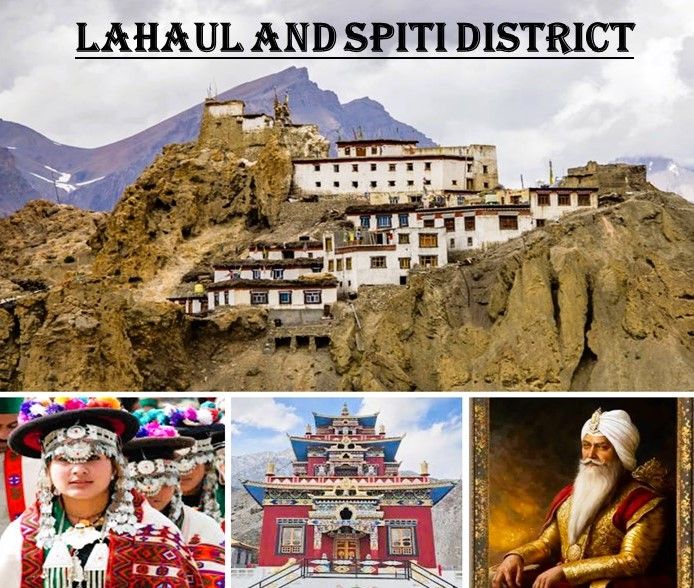
The district of Lahaul and Spiti in Himachal Pradesh is often referred to as the “Land of Monasteries.” Nestled amidst the rugged Himalayan terrain, these monasteries are not only Centers of spirituality but also repositories of art, culture, and history. They reflect the deep-rooted Buddhist traditions of the region and continue to attract pilgrims, scholars, and travelers from across the world.
Guru Ghantal Monastery
- Founded by Padma Sambhava, this monastery is more than 800 years old.
- Unique for its wooden idols, unlike the clay idols found in other monasteries.
- Located on a hill above Tupchiling village, at the confluence of the Chandra and Bhaga rivers.
Shashur Monastery
- Situated about 2 km from Keylong, this monastery is known for its gothic-style architecture.
- Founded in the 17th century by Lama Deva Gyatsho of Zanskar.
- Famous for the Chhame dance festival held in June or July, where masked dances are performed by monks.
Kardang Monastery
- Located on the left bank of the Bhaga River, above Kardang village.
- Founded around 900 years ago, it remained in ruins until 1912, when Lama Norbu restored it.
- Today, it is one of the most important monasteries in Lahaul, housing rare Buddhist scriptures and artifacts.
Kungri Monastery
- Built around 1330 AD, Kungri Gompa is the main center of the Nyingma-pa sect in Spiti.
- Known for its association with tantric practices in Buddhism.
- It remains a vital hub of spiritual learning and cultural activities in Spiti Valley.
Kibber Monastery
- Named after Serkang Rimpochhe of Tabo, this monastery is unique for its stone architecture, unlike the mud-brick structures common in the valley.
- Located in Kibber village, one of the highest inhabited villages in the world.
Gozzangwa Monastery
- Situated in Khardong village, dedicated to Lama Gozzagwa.
- Features ancient rock carvings dating back to the pre-Christian era.
- Often visited along with Shashur Monastery due to proximity.
Hansa Monastery
- Located in Spiti Valley, close to Kungri, Kibber, and Kye monasteries.
- Serves as a spiritual retreat for locals and visitors alike.
Lhalung Monastery
- One of the earliest monasteries in Himachal Pradesh, founded by Rinchen Zangpo in the late 10th century.
- Rinchen Zangpo, known as the “Great Translator,” played a crucial role in spreading Buddhism across the western Himalayas.
- The monastery is renowned for its ancient murals and sculptures.
Other Prominent Monasteries
- Dhankar Monastery: Perched dramatically on a cliff, offering panoramic views of Spiti Valley.
- Tabo Monastery: Known as the “Ajanta of the Himalayas,” famous for its ancient murals and manuscripts.
- Kye Monastery: The largest monastery in Spiti, serving as a major center of Buddhist learning.
- Tayul Monastery: Houses a large statue of Padma Sambhava.
- Mane Monastery: Another important spiritual site in the district.
Conclusion
The Monasteries of Lahaul and Spiti are not just religious centers but living museums of Himalayan art, culture, and spirituality. Each monastery tells a story of devotion, resilience, and the spread of Buddhism in the region. From the ancient murals of Tabo to the tantric traditions of Kungri, from the wooden idols of Guru Ghantal to the stone architecture of Kibber, these monasteries form the cultural heartbeat of the district. For travelers, they offer a rare glimpse into a timeless world where spirituality and tradition remain deeply intertwined with daily life.