
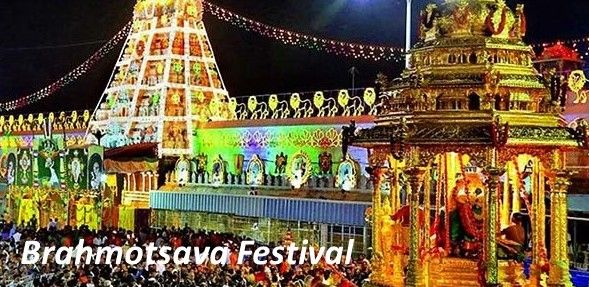
Nestled amidst lush mango and sal groves on the sacred Tirumala hills of the Eastern Ghats, the temple of Lord Venkateshwara in Andhra Pradesh stands as one of India’s most revered and wealthiest shrines. This holy site attracts millions of pilgrims throughout the year, but its most spectacular event is The Brahmotsava Festival, held annually in September. Spanning ten days, the festival is a magnificent blend of devotion, tradition, and grandeur, drawing thousands of devotees from across the country.
Ritual Preparations
- Aalaya Suddhi: Before the festivities begin, the temple undergoes ritual cleansing. The premises are purified and decorated with flowers and mango leaves, symbolizing freshness and auspiciousness.
- Alankaram: Following the cleansing, the temple is beautifully adorned to welcome the divine celebrations.
Mritsangrahanam
On the eve of Brahmotsava, temple officials perform Mritsangrahanam. Prayers are offered to deities such as Vishvaksena, Anantha, Sudarshana, Garuda, and Mother Earth. A small quantity of earth is collected and used in the Ankurarpanamritual, where nine types of cereals are sown, symbolizing fertility, prosperity, and blessings of nature.
Commencement of Brahmotsava
The festival officially begins with Dwajarohanam, the hoisting of the Garuda flag at the Dwajasthambham. Accompanied by Vedic chants, this ritual signifies Garuda’s journey to invite gods such as Brahma, Indra, Yama, Agni, Kubera, and Vayudeva, along with sages like Vasistha and Vishwamitra.
Sacred Rituals
- Choornabhishekam: On the ninth day, Lord Venkateshwara and his consorts are bathed after being anointed with sandalwood powder. The idols are then taken in a grand procession across Tirumala streets on various vahanas (divine vehicles). Devotees receive the sandalwood powder, believed to remove obstacles and bring blessings.
- Snapanam: Following the procession, the Lord is bathed with herbal water, symbolizing rejuvenation and divine grace.
- Chakrasnanam: On the final day, Lord Venkateshwara, his consorts, and the Sudarshanachakram are bathed in the sacred Swami Pushkarini. Devotees also participate, as bathing in the holy waters is considered highly auspicious, transcending barriers of caste, creed, or religion.
- Devatodwasanam: The festival concludes with a ritual farewell to the gods and sages invited during the celebrations, marking the completion of the divine journey.
Cultural and Spiritual Significance
The Brahmotsava Festival is more than a religious event; it is a spiritual journey that unites thousands of devotees in devotion and celebration. Each ritual from cleansing the temple to the final farewell symbolizes purity, prosperity, and divine blessings. The grandeur of the processions, the sacred chants, and the collective participation of devotees make Brahmotsava one of the most remarkable festivals in India’s cultural calendar.
This Celebration Highlights the deep-rooted traditions of Andhra Pradesh and showcases the timeless devotion of millions who gather to honor Lord Venkateshwara. It is a living testament to India’s rich spiritual heritage, where faith, culture, and community converge in harmony.