
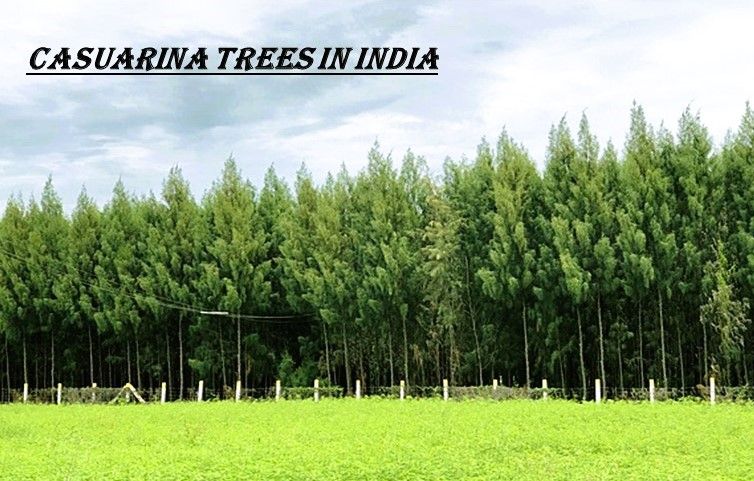
Casuarina equisetifolia, commonly known as the Casuarina tree, is a hardy evergreen species that has become an integral part of India’s coastal and rural landscapes. Belonging to the family Casuarinaceae, this tree is widely cultivated across tropical and subtropical regions. While its ecological role in stabilizing sandy soils is well recognized, the Casuarina tree is equally valued for its diverse practical uses ranging from fuelwood to traditional medicine.
Timber and Wood Uses
The Wood of the Casuarina Tree is solid but has an irregular grain, making it difficult for carpenters to work with. It tends to split and break easily, which limits its use in fine carpentry. Instead, it is more suitable for beams, posts, and fencing materials. Farmers and rural communities often rely on Casuarina timber for basic construction needs, particularly where durability is not the primary requirement. However, the wood does not last long underground, which restricts its use for structures like buried posts.
Despite these limitations, Casuarina wood is highly valued as fuelwood. It burns hot and efficiently, making it a preferred source of energy in rural households. Typically, trees are harvested at 10–12 years of age for fuel, though if left to mature until 20 years, the timber becomes stronger and more versatile. This dual utility—fuel and construction—makes Casuarina an important resource for communities living along India’s coasts and inland regions.
Bark Applications
The bark of the Casuarina tree has traditional uses, particularly in fishing communities. It is employed for tanning and dyeing fishermen’s nets, helping to preserve them against wear and tear. This practice highlights the tree’s integration into local livelihoods, especially in coastal districts where fishing is a primary occupation.
Additionally, the bark has medicinal properties. It is used as a tonic and in the treatment of stomach complaints. Its extracts are believed to aid digestion and provide relief from common gastrointestinal issues.
Medicinal Uses of Roots
The roots of Casuarina are equally significant in traditional medicine. Extracts from the roots are used to treat dysentery, diarrhoea, and stomach-ache. These remedies have been part of indigenous healthcare practices for generations, reflecting the tree’s role not only in ecological sustainability but also in human well-being.
Ecological and Cultural Value
Beyond its direct uses, Casuarina plays a vital ecological role. Its nitrogen-fixing root nodules enrich the soil, reducing dependence on external fertilizers. This makes it a sustainable choice for reforestation and land reclamation projects. The tree also serves as a windbreak, protecting agricultural lands and coastal villages from strong winds and storms.
Culturally, Casuarina has been integrated into rural life as a roadside tree, a garden plant, and a source of livelihood. Its presence in coastal regions symbolizes resilience, as it thrives in sandy soils and withstands extreme temperatures up to 47°C.
Conclusion
The Casuarina Tree is more than just a fast-growing evergreen; it is a versatile resource that supports both ecological balance and human needs. From fuelwood and fencing to tanning, dyeing, and traditional medicine, Casuarina equisetifolia has proven indispensable in India’s coastal and rural communities. Its adaptability to harsh environments and its wide range of uses underscore its importance as a sustainable species. As India continues to face challenges of resource management and environmental conservation, the Casuarina tree remains a valuable ally in ensuring both ecological stability and cultural continuity.